Activities
PT RIMBA MAKMUR SENTOSA 2025 ANNUAL WORK PLAN FOR FOREST PRODUCT UTILIZATION
PT Rimba Makmur Sentosa has prepared the 2025 Annual Work Plan for Forest Product Utilization (RKTPH), which was drafted by Forestry Professional/GANISPH Ribut Hidayat and has been approved by the President Director. The approval of the RKTPH was granted through Decision Number 001/DIR-RMS/JKT/RKT/I/2025 dated January 10, 2025.
 |  |
COMPANY POLICY AND COMMITMENT

CONFLICT RESOLUTION PROCEDURES


High Conservation Value (HCV) Management Planning and Monitoring
PT Rimba Makmur Sentosa (PT RMS) is committed to implementing sustainable natural forest management by not only focusing on production aspects, but also taking into account the surrounding social, cultural, and environmental aspects. Therefore, the Management Unit (MU) has voluntarily chosen Controlled Forest Management certification under the Forest Stewardship Council (FSC) scheme.
The Vision of PBPH-HA PT RMS is to become a Forest Management Unit capable of balancing production functions, ecological functions, and social functions, ultimately achieving sustainable conservation of these functions and providing benefits to all stakeholders.
To achieve this vision, PBPH-HA PT RMS has the following missions:
- To manage forests sustainably and under certification to improve productivity, quality, and the value of forest resources.
- To utilize timber forest products and other forest products to increase company revenue and profits as well as improve the welfare of communities surrounding the forest.
- To strive to comply with applicable laws and regulations and other requirements in achieving sustainable forest management, both mandatory requirements from the Ministry of Forestry and voluntary requirements.
- To commit to not offering or accepting bribes or any other forms of corruption related to the implementation of activities or the acquisition of permits in the context of sustainable forest management at PBPH PT Rimba Makmur Sentosa.
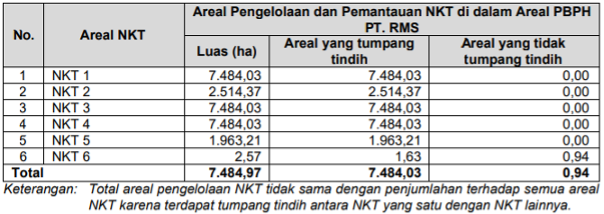
The High Conservation Value (HCV) or Nilai Konservasi Tinggi (NKT) assessment is conducted to identify and protect areas that have important ecological, social, and cultural values within a region. This assessment aims to ensure that areas with High Conservation Values are managed and protected sustainably so that they do not suffer degradation due to human activities such as forest management, plantations, or development.
The identification of High Conservation Value Areas (HCVA) in 2025 was carried out in collaboration with the Tropical Forest Foundation. This activity is one of the requirements to fulfill the principles and criteria of the FSC scheme. In this table, HCVs are described into several categories and sub-categories as follows:
Table 1. Area of High Conservation Value at PT Rimba Makmur Sentosa
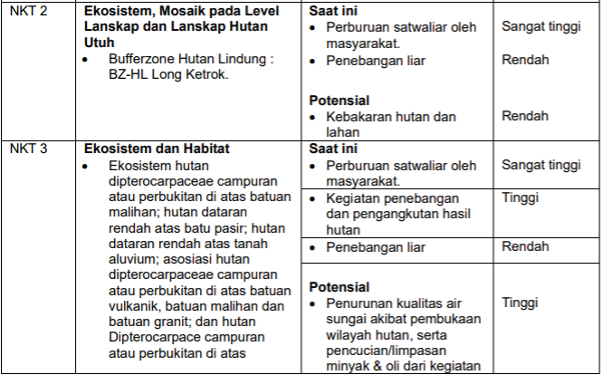
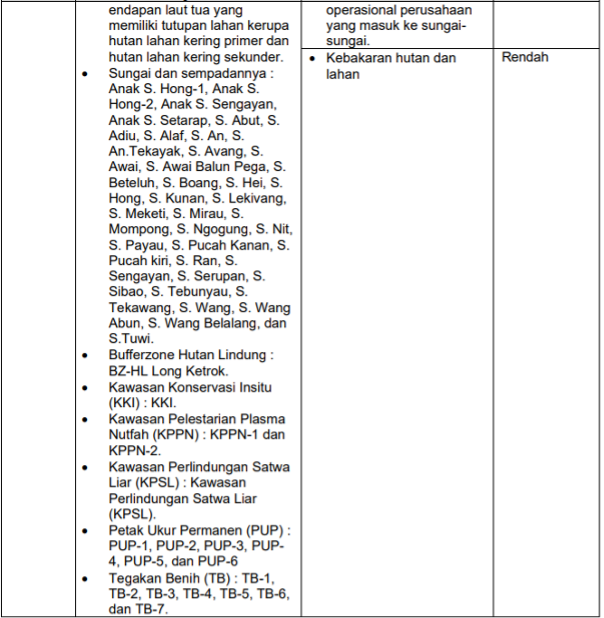
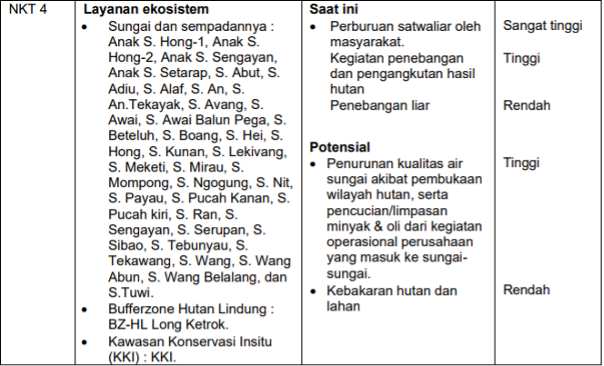
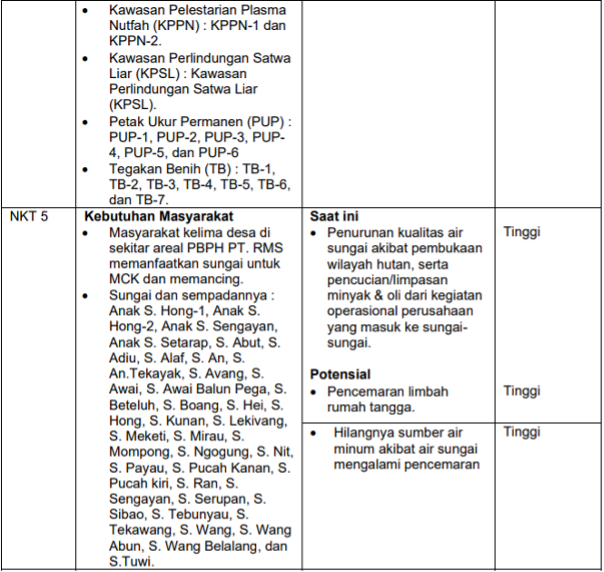
The approach used in assessing threats to HCVs within the PBPH PT RMS area is a qualitative approach. This approach measures the relative impact of an event and tends to focus more on strategic and political aspects in avoiding or reducing the negative impacts of a risk. The threat assessment to HCVs in the PBPH PT RMS area was carried out using four (4) methods:
- Literature review
- Interviews
- Focus Group Discussions (FGD)
- Field observations
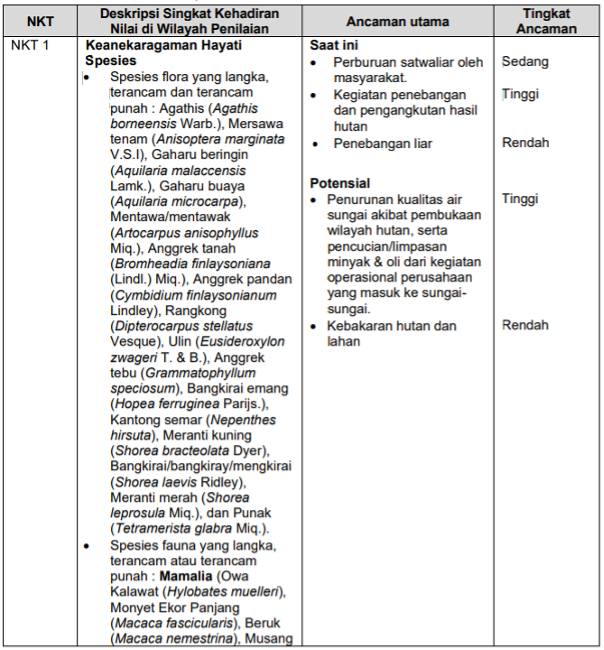
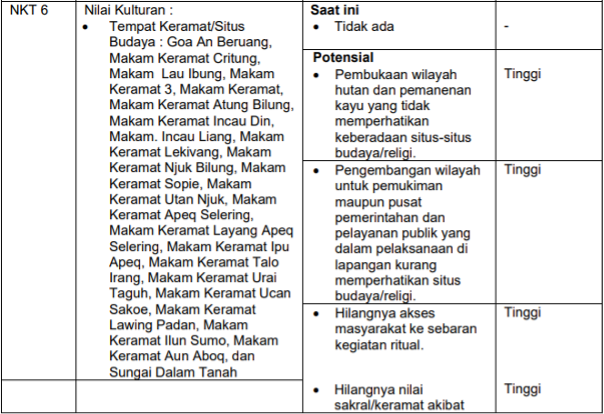
The assessment was directed at two sources of threats (internal and external) and two conditions (current and potential). Activities that threaten the existence of HCVs in the PBPH PT RMS area are presented in the following table:
Table 2. Threats to HCV Areas in PBPH PT RMS

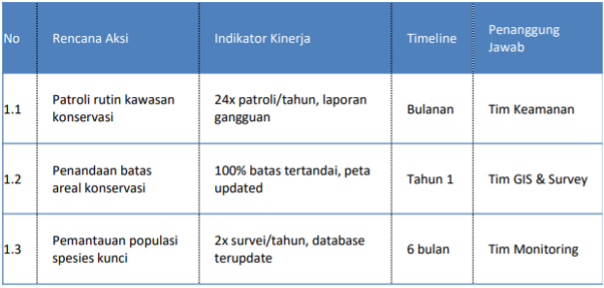
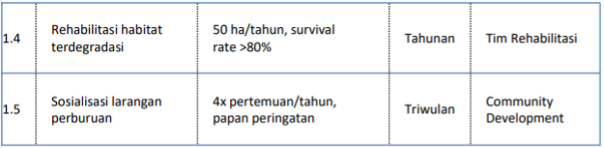
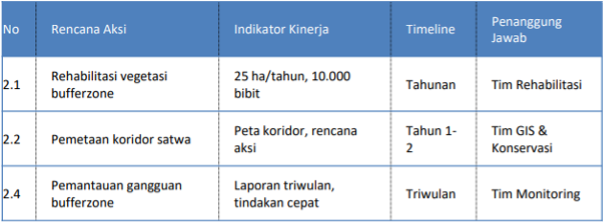
The HCV management and monitoring plan includes:
- Routine patrols in HCV areas.
- Technological approaches such as the installation of warning signs, etc.
- Socio-economic approaches involving stakeholders, such as outreach and socialization activities.
- Independent monitoring or monitoring in collaboration with third parties.
HCV 1: Species Biodiversity
HCV 2: Landscape-Level Ecosystems
HCV 3: Ecosystems and Habitats
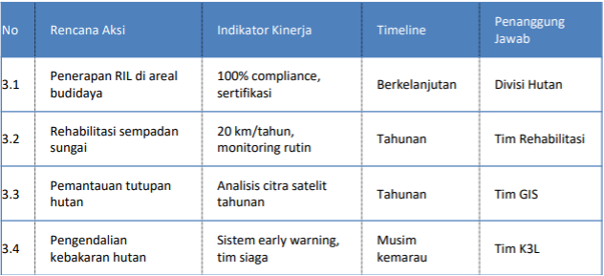
HCV 4: Ecosystem Services
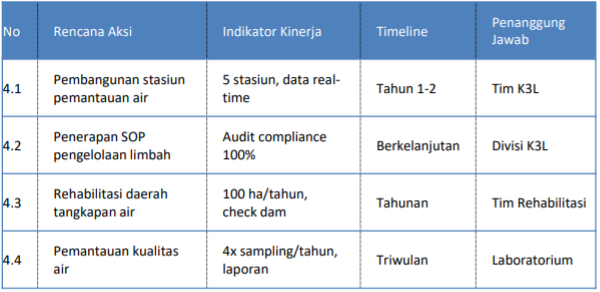
HCV 5: Community Needs
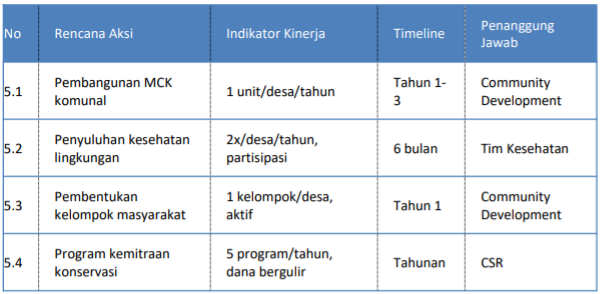
HCV 6: Cultural Values

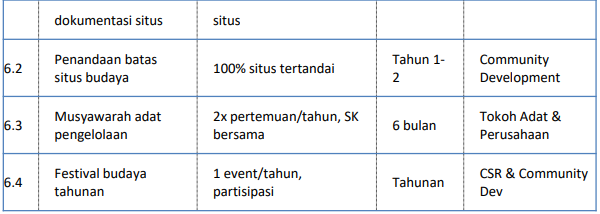
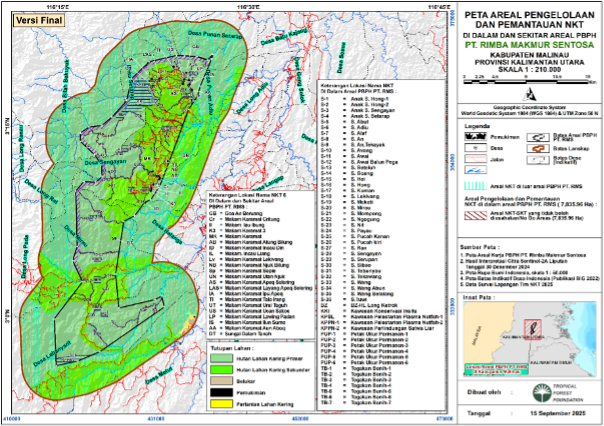
Map of HCV management and monitoring areas within and around the PBPH PT RMS area.
Mitigation of Forest and Land Fire Potential
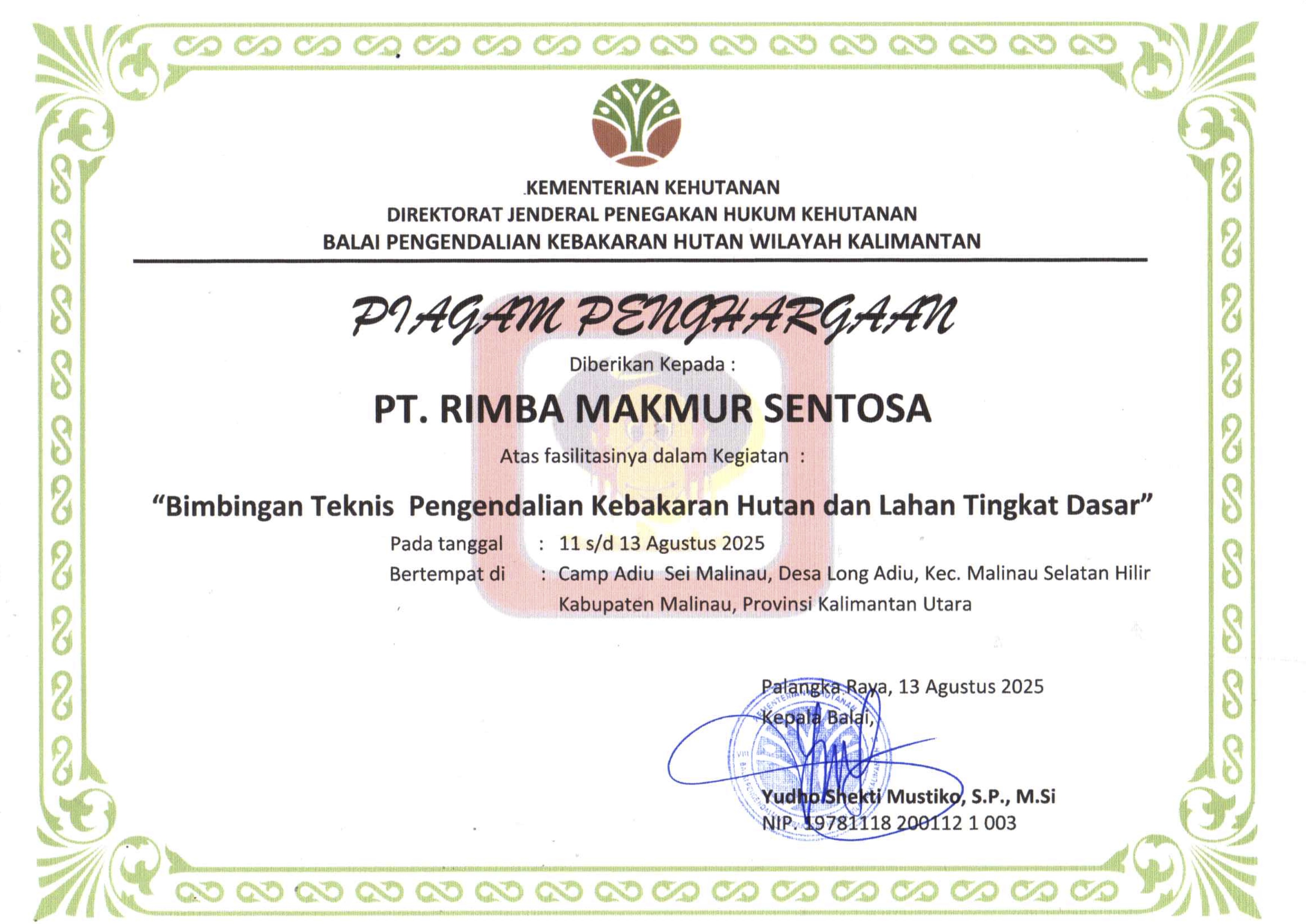
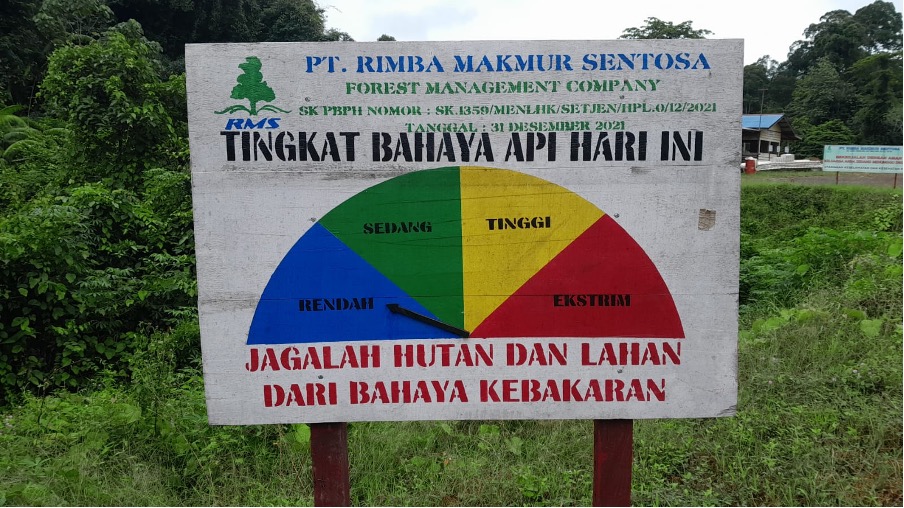
In an effort to improve preparedness in facing potential forest and land fires (Karhutla), PT Rimba Makmur Sentosa is committed to preventing forest and land fires by conducting basic-level forest and land fire control technical training organized by the Kalimantan Regional Forest Fire Control Center in 2025.
Growth Increment Analysis from Permanent Sample Plots
In the management of natural production forests in Indonesia using the selective logging silvicultural system, namely the Indonesian Selective Cutting and Planting System (TPTI), harvesting is permitted selectively on trees with a diameter ≥ 50 cm with a cutting cycle of 35 years for dryland forests. For swamp forests, based on the Decree of the Minister of Forestry No. 24/Kpts/IV-Set/1996, the cutting diameter limit is set at 40 cm with a cutting cycle of 40 years.
PT Rimba Makmur Sentosa (PT RMS) completed the establishment of Permanent Sample Plots (PSP) Series II in March 2015, and conducted the fifth measurement in March 2023.
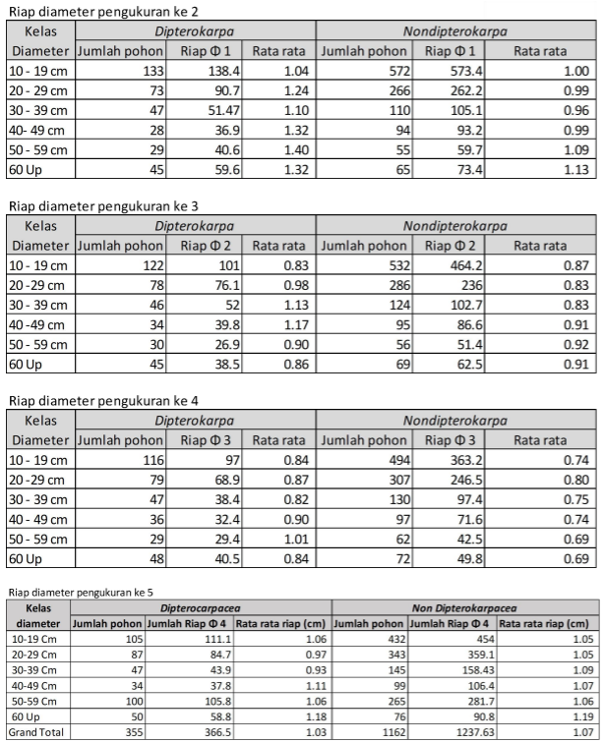
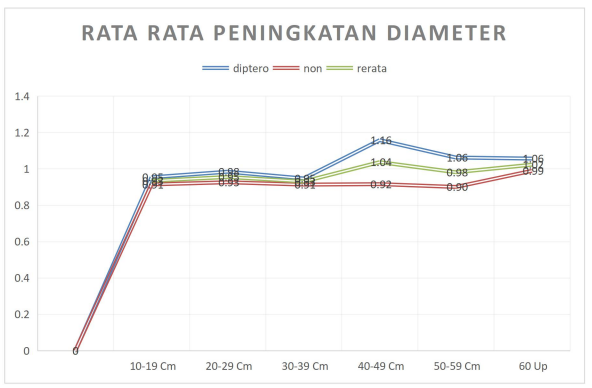
Based on the distribution of diameter increment by diameter class, the observed growth rate for commercial species tends to be stable from the 10-19 cm diameter class to the 30-39 cm diameter class (ranging from 0.82-0.87 cm/year). Growth then increases in the 40-49 cm diameter class (ranging from 0.92 to 1.16 cm/year) and subsequently decreases in diameter classes above 60 cm, where the increment declines to approximately 1.06 cm/year.
For non-commercial species, diameter increment tends to be stable from the 10-19 cm to the 30-39 cm diameter classes (around 0.93 cm/year), then increases in diameter classes above 60 cm and reaches approximately 0.69 cm/year.
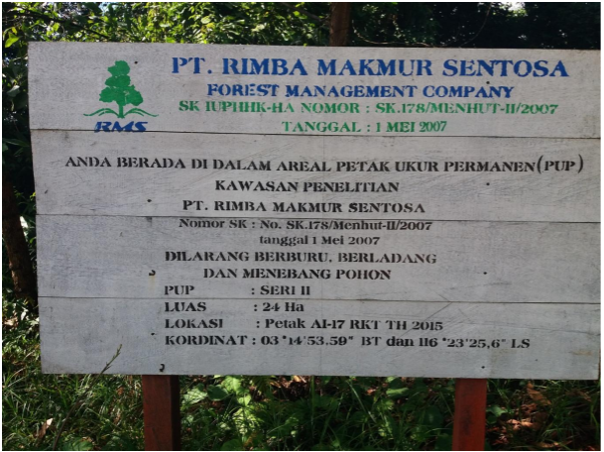
Location of Permanent Sample Plots of PT Rimba Makmur Sentosa